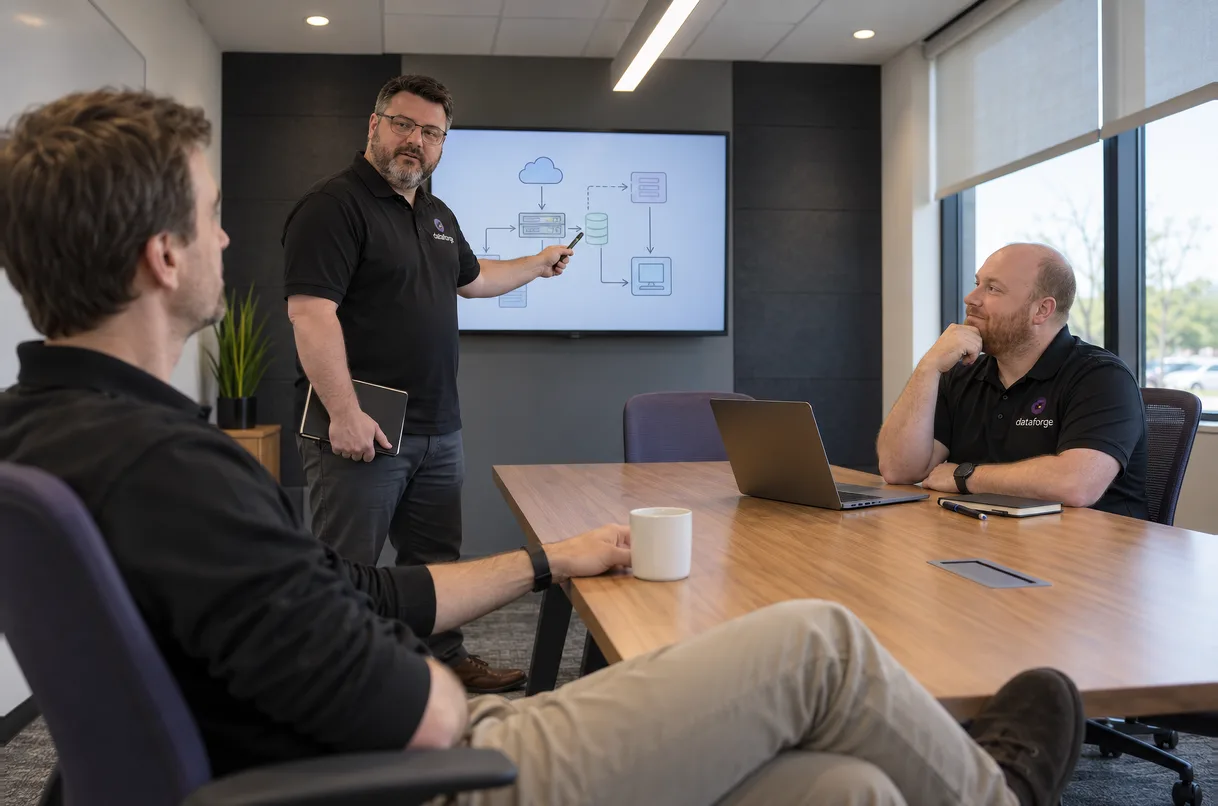
When an IT consulting firm can't connect new technologies to your business's real challenges, every future project quietly becomes more expensive. The cost isn't just in money—it's in repeated work and lost time.
Picture handing a six-month systems overhaul to an outside consultant, only to discover three months in that the new platform doesn't match how your team actually works. The rebuild costs almost as much as the original project.
That gap between technology advice and real operating challenges can quietly set a business up for extra costs down the road. The damage rarely shows up on day one; it builds with every project that follows, compounding until someone finally has to address it.
IT consulting is about more than recommending the latest tools, because tools alone solve nothing if they don't fit how the business actually operates. The real job is making sure those tools help the business work better in practice, not just in a proposal. When that connection is missing, the bill often includes work that has to be changed or redone later.

Many businesses trust consultants to bring in new technology, yet not every consultant takes the time to understand how that business really works. This gap can lead to solutions that look good on paper but don't fit daily operations.
When a consultant fails to translate technology into business context, the result is a system that needs constant adjustment. Each change brings more time, more resources, and more money spent, and over time these small fixes add up into something much larger.
A new software platform, for instance, might be installed without much thought to how the team actually uses it day to day. As needs shift, the project may need to be re-scoped or even restarted. That cycle quietly increases costs and delays progress at exactly the moments when speed matters most.
At first, a poorly matched solution might just seem inconvenient, a minor friction point rather than a real problem. As the business grows, though, that friction becomes expensive: every rework of a system or adaptation of a process means paying for the same ground twice.
These costs aren't always obvious. They show up as longer project timelines, extra training sessions, or the need to bring in outside help to fix issues, and each of these quietly eats into the budget while slowing the business down.
For a company in Vancouver working with an IT consultancy near me, this alignment matters even more, since local regulations, customer expectations, and the way a team communicates can all shape how technology should be deployed.
Because this groundwork shapes everything downstream, the approach an IT consulting business takes will define every project that follows. A consultant who takes the time to learn the business process and tailor solutions accordingly delivers systems that grow with the company; one who doesn't leaves behind a trail of ongoing adjustments and rising costs.
A consultant who listens and asks questions about day-to-day work is more likely to deliver results that last. Rather than simply installing technology, this kind of consultant makes sure it fits the business's goals and can adapt as those goals change.
Spotting a disconnect between technology and real business needs isn't always easy, but a few patterns tend to give it away:
Noticing even one or two of these patterns is reason enough to ask whether a consultant truly understands the business's challenges.
A consultant who adds real value does more than deliver technology; the work starts with understanding the business from the inside out, which means asking about goals, pain points, and how the team works together.
That understanding only matters if it's communicated, so a strong consultant keeps the conversation open and makes sure each step of the process is clear. When changes are needed, they explain why and help plan for what comes next, and this kind of partnership is what prevents repeated costs and keeps projects on track.
Avoiding payment for the same work twice starts with choosing a consulting partner who can bridge the gap between technology and business needs. A few concrete steps make that easier:
Taken together, these steps catch issues early and keep projects moving forward without extra costs piling up later.
Among technology consulting firms, the ones that stand out focus on long-term fit rather than quick fixes. A few qualities tend to set them apart.
They take time to learn operations, not just technical requirements. This grounding is what lets them recommend solutions that truly fit.
They explain technical details in plain language, so there's always clarity on what's happening and why.
Their recommendations are built to grow with the business, which means no starting over when things change.
They check in after launch, helping adjust and optimize as the business evolves.
They measure success by how well the solution supports business goals, not simply by finishing the project.
They understand the specific needs of businesses in Vancouver, making sure solutions fit that environment.
When an IT management consulting partner can't translate new technologies into real business challenges, the cost of that gap gets paid again and again, with each project becoming more expensive and less effective than the last.
Working with a consultant who takes the time to understand those needs reverses that pattern and builds a foundation for future success. Systems work better, costs stay predictable, and the business can adapt as circumstances change.

If your business has 1 to 40 users, you know how frustrating it can be when IT projects need to be redone or adjusted again and again. At Dataforge Canada, we understand how these hidden costs add up and why it matters to get it right the first time.
We invite you to see how we approach technology consulting by focusing on your real business needs from the start. Let's talk about your setup and how we can help you avoid paying for the same work twice.
Lock in your IT service rate for up to 2 years, with priority support and the flexibility to leave with 30 days’ notice during the first 12 months.
[.mspl-button-text]Lock in your rate[.mspl-button-text]
A consulting firm that understands a business asks detailed questions about operations and goals, spending real time learning workflows and team structure before proposing anything. Recommendations that feel generic, or a consultant who rarely checks in after a project wraps up, are signs that understanding may be missing.
Expect clear explanations of how each technology will help the business and how it fits with existing systems. The consultant should guide the implementation process, provide training where needed, and offer support after launch to confirm everything works as planned.
Yes, a strong consultant recommends solutions that are flexible enough to grow with the business. Regular review of systems and timely suggestions for updates mean projects don't need to be redone from scratch as needs shift.
Technology that isn't matched to business process tends to produce repeated project costs, delays, and frustration among the team. Systems that don't fit existing workflows slow down daily operations and require frequent adjustments, each one adding to the expense.
Look for a firm with experience working with businesses of similar size and in the same industry. Ask for examples of past projects, pay attention to communication style, and confirm the focus stays on understanding goals rather than pushing a fixed solution. The right fit helps a startup avoid costly mistakes while setting up room for growth.